
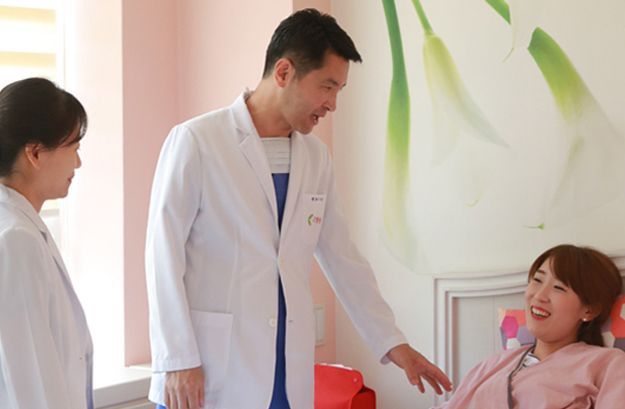
A Pap smear (Pap test) is a screening test that collects cells from the cervix to look for abnormal changes before they become cancer. It takes a few minutes during a speculum exam and is often combined with a test for high-risk HPV, the virus that causes most cervical cancers. Abnormal results usually mean follow-up testing, not cancer.
- Purpose
- Detect precancerous cervical changes
- Time
- A few minutes
- Discomfort
- Brief pressure for most
- Often combined with
- High-risk HPV test
- Results
- Usually within about a week
- Korea screening
- NHIS: women 20+, every 2 years
What does a Pap smear check?
The cervix is the lower part of the uterus that opens into the vagina. Long-lasting infection with high-risk HPV can cause cells there to change slowly over years. A Pap smear looks at these cells under a microscope ( cytology), so that precancerous changes can be treated before cancer develops.
A Pap smear is a screening test, not a diagnosis, and it does not test for other infections such as chlamydia unless these are requested separately. For testing options see STD testing.
Pap smear vs. HPV test
| Pap smear (cytology) | HPV test | |
|---|---|---|
| What it looks for | Abnormal cervical cells | High-risk HPV types |
| How it is collected | Cervical swab or brush | Same sample (co-testing) or separately |
| What a positive means | Cells need follow-up | Higher risk; may need Pap or colposcopy |
| Typical use | Screening, often from age 20–21 | Screening from about age 25–30, or after an unclear Pap |
Screening intervals differ by country. In Korea, the national program offers a Pap smear to women aged 20 and over every 2 years under NHIS. Your doctor can recommend an interval that fits your age, history and home-country guidelines. Learn more about HPV.
What happens during the test?
- Brief consultation Your last screening, any previous abnormal results, HPV vaccination and symptoms are reviewed in English.
- Getting ready You undress from the waist down in private and lie on the exam chair, covered with a drape. A chaperone is available on request.
- Speculum exam A speculum gently opens the vagina so the cervix can be seen. Tell the doctor if anything is uncomfortable.
- Sample collection A small brush or spatula collects cells from the cervix in a few seconds; light spotting afterwards can be normal.
- Results The sample is sent to the lab; results are usually available within about a week and explained in English.
Tips: try to book when you are not bleeding heavily, and avoid intercourse, douching and vaginal creams for about 48 hours beforehand if you can.
Understanding your results
| Result | What it means | Usual next step |
|---|---|---|
| Normal (NILM) | No abnormal cells found | Routine screening |
| ASC-US | Unclear minor changes | HPV test or repeat Pap |
| LSIL | Low-grade changes, often HPV-related | Colposcopy or repeat test, depending on HPV and age |
| HSIL / ASC-H | Higher-grade changes | Colposcopy with biopsy |
| AGC | Abnormal glandular cells | Colposcopy and further evaluation |
Most abnormal results are not cancer, and many low-grade changes clear on their own. When a closer look is needed, see colposcopy; treatment of high-grade changes may involve LEEP.
Screening can find areas of abnormal cells on the cervix, often linked to persistent HPV infection.
With follow-up or treatment of significant changes, the cervix can return to a healthy appearance.
Pap smear at Yoonho
At Yoonho Women’s Hospital in Apgujeong, Seoul, Pap and HPV tests are performed by Dr. Sun-Ok Lee, an OB-GYN specialist focused on screening and general gynecology, with English explanations and an English results report for your records. Visitors and residents can walk in; practical details such as booking and payment for foreigners are in our Pap smear guide for foreigners.
Cost and insurance
Women enrolled in NHIS can usually have the national cervical screening at low or no cost when eligible; additional HPV tests may be charged separately. For others, the cost depends on whether HPV testing is added; a written estimate is given after consultation. See health insurance for foreigners and travel insurance claims.
Why international patients choose Yoonho
Frequently asked questions
Does a Pap smear hurt?
Most women feel brief pressure or mild discomfort for a few seconds. Telling the doctor if you are tense helps; a smaller speculum can be used.
Can I have a Pap smear during my period?
Light spotting is usually fine, but heavy bleeding can affect the sample. If possible, book a few days after your period ends.
How often should I have a Pap smear?
It depends on age, results and guidelines. Korea’s national program offers screening every 2 years from age 20; many other countries screen every 3–5 years with HPV testing. Ask your doctor what suits you.
Do I need a Pap smear if I had the HPV vaccine?
Yes. The vaccine protects against the most common high-risk types, but not all of them, so regular screening is still recommended.
Will I receive my results in English?
Yes. Results can be explained in English and issued as an English report for your home doctor or insurer.
OB-GYN Specialist · Director of OB-GYN
M.D., Ewha Womans University College of Medicine · Former Clinical Instructor, Ewha Womans University Mokdong Hospital · Member, Korean Society of Menopause
Last reviewed: . This page is for general information and does not replace an in-person consultation.
Talk to an English-speaking gynecologist
Yoonho Hospital · 304 Apgujeong-ro, Gangnam-gu, Seoul · Mon–Fri 9:00–18:00, Sat 9:00–13:00 · Walk-ins welcome.