
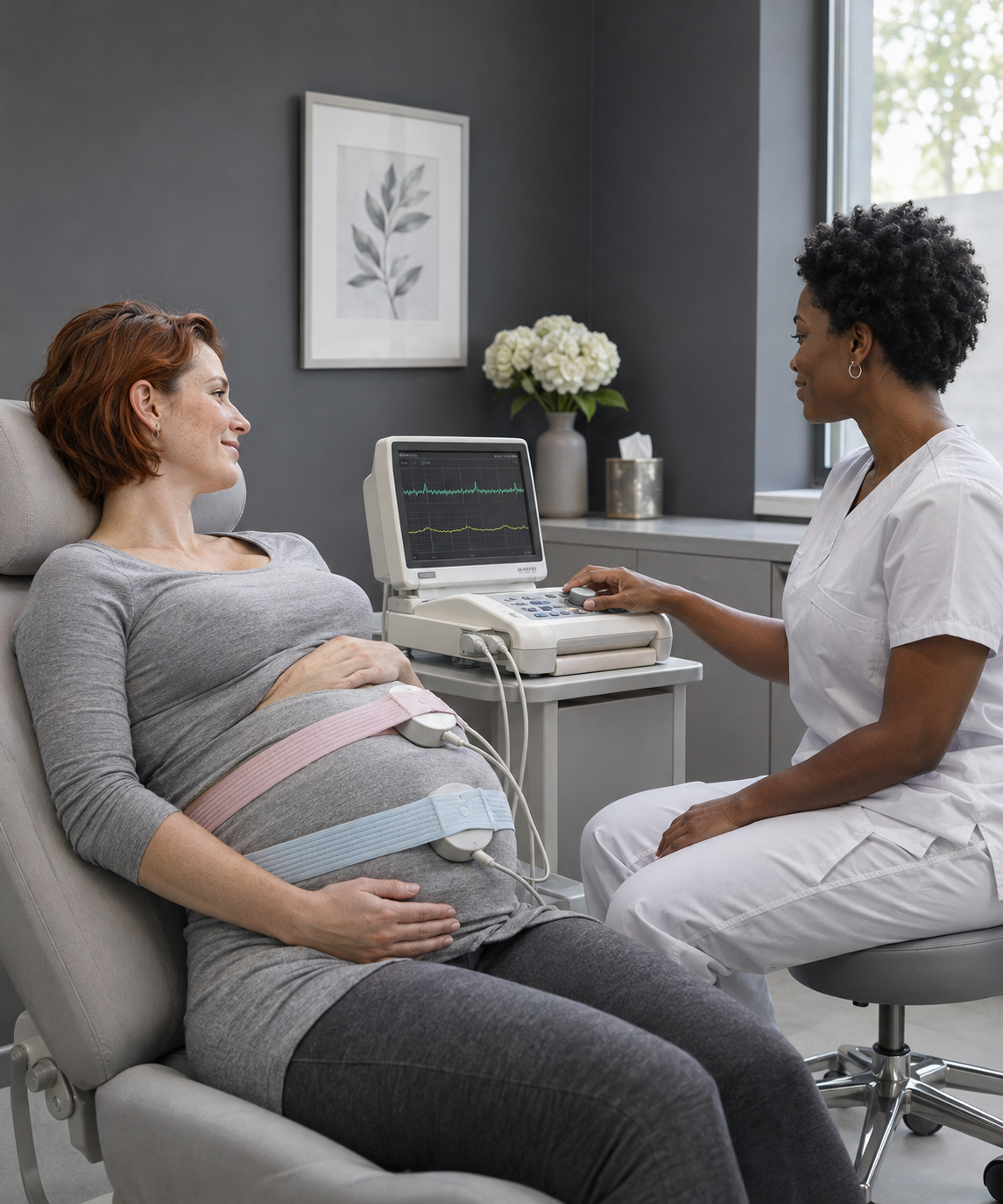
Expats in Seoul usually receive prenatal care at an OB-GYN clinic or hospital, starting with a pregnancy test and early ultrasound, then visits about every 4 weeks, becoming more frequent later in pregnancy. Ultrasound is used often in Korea. Foreigners enrolled in National Health Insurance can receive a pregnancy voucher. At Yoonho Women's Hospital in Apgujeong, early pregnancy care is explained in English.
- First visit
- Test, early ultrasound, due date
- Visit interval
- About every 4 weeks, then more often
- Key screenings
- Blood tests, anomaly scan, glucose test
- Insurance
- NHI covers many prenatal services
- Voucher
- NHI pregnancy voucher for enrollees
- Documents
- English records on request
How does prenatal care work in Korea?
In Korea, pregnancy care is led by OB-GYN specialists (산부인과 전문의) rather than midwives or GPs. You can book directly without a referral. Compared with many Western countries, Korean clinics tend to perform ultrasound at most visits, and many women choose the hospital where they plan to give birth early in pregnancy.
If you have just had a positive home test, start with our guide to the pregnancy test and early ultrasound in Seoul.
What is the typical visit schedule?
| Stage | Usual visit interval | Common checks |
|---|---|---|
| First trimester (to ~13 weeks) | Confirm pregnancy, then about every 4 weeks | Early ultrasound, due date, blood and urine tests, nuchal translucency scan |
| Second trimester (14–27 weeks) | About every 4 weeks | Screening tests, detailed anomaly ultrasound, glucose test around 24–28 weeks |
| Third trimester (28–36 weeks) | About every 2 weeks | Growth scans, blood pressure, anemia check, Group B strep test as offered |
| 36 weeks to birth | Weekly | Baby's position, fetal monitoring, delivery planning |
Your doctor may adjust the schedule based on your age, health and pregnancy history.
Your first prenatal visit, step by step
- Book or walk in Message by WhatsApp or KakaoTalk, or walk in during opening hours. Bring your passport or ARC.
- Consultation in English Your last period, previous pregnancies, medical conditions and medicines are reviewed.
- Early ultrasound Confirms the pregnancy is in the uterus, checks the heartbeat when visible, and estimates the due date.
- Initial tests Blood and urine tests are arranged, and cervical screening if due.
- Plan and documents You leave with next appointment dates, advice on folic acid and medications, and English documents on request.
- Unsure where to start after a positive test
- Unfamiliar visit schedule and tests
- Insurance and voucher questions
- No plan for delivery hospital
- Early ultrasound confirms the pregnancy
- Visit schedule explained in English
- Insurance options and documents clarified
- Delivery plan discussed early
Insurance, the pregnancy voucher and costs
Foreigners staying in Korea for 6 months or more are generally enrolled in National Health Insurance (NHI), which covers many prenatal services. NHI enrollees can apply for a pregnancy and childbirth voucher(often used through the Kookmin Happiness Card) once pregnancy is confirmed by a medical institution; the support amount and rules are set by the government and change over time. Some tests and private rooms are not covered.
Without NHI, prenatal care is self-paid; ask for estimates in advance. Learn more about health insurance for foreigners and English documents for insurance claims.
Planning where to give birth
Not every OB-GYN clinic provides delivery services. Many expats begin care at a clinic near home or work and transfer to a delivery hospital or university hospital later, especially for twin or higher-risk pregnancies. Ask early:
- Does the clinic provide care through delivery, or refer to a partner hospital?
- Is English support available on the labor ward and at night?
- What pain relief options, such as epidurals, are offered?
- Is there a neonatal intensive care unit on site?
- How will records transfer if you change hospitals or leave Korea?
At Yoonho, discuss your delivery plans at your early visits so the doctor can advise on continuing care or referral.
When to seek care urgently during pregnancy
Early pregnancy bleeding or pain can be a sign of miscarriage or ectopic pregnancy and should be checked promptly with an ultrasound.
Why international patients choose Yoonho
Frequently asked questions
Can foreigners get prenatal care in Korea without NHI?
Yes. Care is available on a self-pay basis. Ask for estimates in advance, and request English receipts if you plan to claim from private insurance.
When should I have my first prenatal visit?
Usually around 6–8 weeks after the first day of your last period, or earlier if you have pain, bleeding or a history of ectopic pregnancy.
Why do Korean doctors do so many ultrasounds?
Frequent ultrasound is common practice in Korea to monitor growth and wellbeing. You can ask the doctor about the purpose of each scan.
Does Yoonho deliver babies?
Ask at your early visit. The doctor will explain whether care can continue at Yoonho through your pregnancy or whether referral to a delivery hospital is recommended.
Can I fly while pregnant?
Many airlines restrict travel late in pregnancy and may require a fit-to-fly letter. Discuss travel plans with your doctor; an English medical certificate can be provided.
OB-GYN Specialist · Director of OB-GYN
M.D., Ewha Womans University College of Medicine · Former Clinical Instructor, Ewha Womans University Mokdong Hospital · Member, Korean Society of Menopause
Last reviewed: . This page is for general information and does not replace an in-person consultation.
Talk to an English-speaking gynecologist
Yoonho Hospital · 304 Apgujeong-ro, Gangnam-gu, Seoul · Mon–Fri 9:00–18:00, Sat 9:00–13:00 · Walk-ins welcome.