
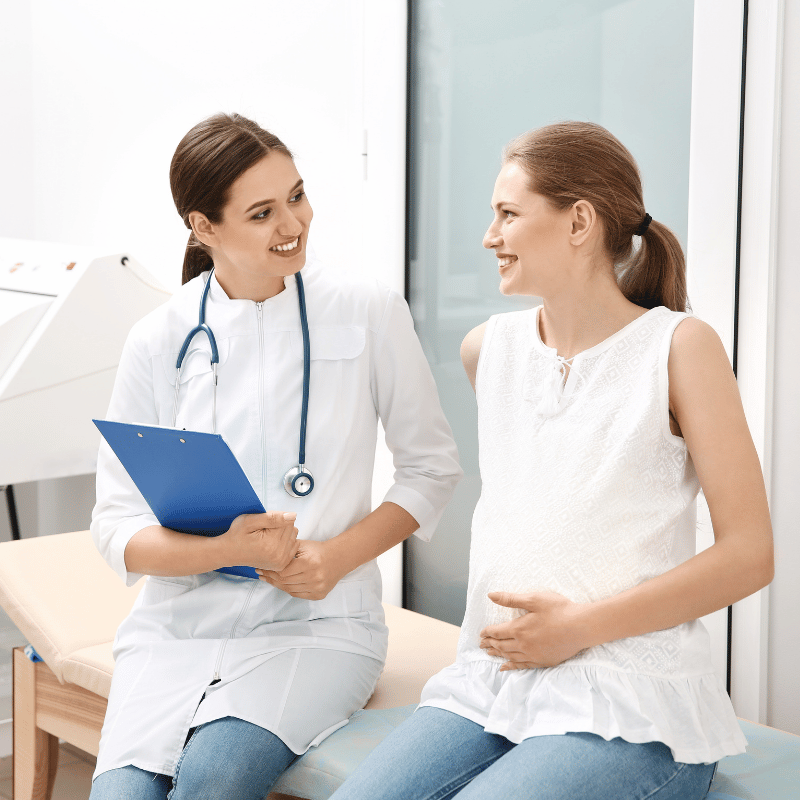
A preconception checkup is a visit before trying to conceive to review your health, update vaccines and look for problems that can affect pregnancy. At Yoonho Women's Hospital in Apgujeong, Seoul, it typically combines an English consultation, pelvic ultrasound and blood tests such as rubella immunity and thyroid function, plus AMH for ovarian reserve if you wish.
- Who it's for
- Planning pregnancy now or later
- Main tests
- Ultrasound, blood tests, Pap if due
- Ovarian reserve
- AMH blood test (optional)
- Folic acid
- 400 mcg daily, from ≥1 month before
- Fertility evaluation
- After 12 months (<35) or 6 months (35+)
- Language
- Consultation and reports in English
What is a preconception checkup?
A preconception checkup is a planned visit, ideally about 3 months before you start trying, to prepare for a healthy pregnancy. It covers:
- Your medical, surgical and pregnancy history
- Current medications and supplements — some need changing before pregnancy
- Vaccines such as rubella (MMR), chickenpox and hepatitis B
- Cycle regularity and any symptoms like heavy or painful periods
- Lifestyle factors: smoking, alcohol, weight and folic acid
For a detailed look at the counseling itself, see preconception counseling.
Which tests are included?
| Test | What it checks | Notes |
|---|---|---|
| Pelvic ultrasound | Uterus, lining and ovaries; fibroids, polyps, cysts | Usually done the same day — see pelvic ultrasound |
| Pap smear / HPV test | Cervical screening | Only if you are due |
| Complete blood count | Anemia | Common with heavy periods |
| Rubella and varicella immunity | Protection against infections harmful in pregnancy | If not immune, vaccinate and avoid pregnancy for 1 month after |
| Hepatitis B, HIV, syphilis | Infections that can affect pregnancy | Standard screening |
| Thyroid function (TSH) | Under- or overactive thyroid | Can affect cycles and pregnancy |
| AMH (optional) | Ovarian reserve (egg supply) | Does not on its own predict natural conception |
| Blood type | ABO and Rh status | Useful for later prenatal care |
When should you have a fertility evaluation?
| Your age | Seek evaluation after trying for |
|---|---|
| Under 35 | 12 months of regular unprotected sex |
| 35–39 | 6 months |
| 40 and older | Consider evaluation before or as soon as you start trying |
See a doctor sooner if you have very irregular or absent periods, known endometriosis, a history of pelvic infection or pelvic surgery, or recurrent pregnancy loss. Fertility is a couple's question: a male partner's semen analysis is arranged through a urology clinic, as Yoonho is a women's hospital.
Your checkup at Yoonho, step by step
- Choose your timing Hormone tests such as FSH and estradiol are usually done on days 2–5 of the cycle; AMH and most other tests can be done on any day.
- Consultation in English An OB-GYN specialist reviews your history, cycle, medications and plans.
- Pelvic ultrasound The uterus and ovaries are checked on the same day.
- Blood tests A single blood draw covers the tests you choose with your doctor.
- Results visit Results are explained in English, usually within a few days to a week, and an English summary is available.
- Your plan Advice on timing, vaccines and supplements — and, if needed, treatment of findings or referral to a fertility center for assisted reproduction.
- Unknown rubella or hepatitis B immunity
- Fibroids or cysts not yet identified
- Medications not reviewed for pregnancy
- Folic acid not yet started
- Vaccines updated before trying
- Uterus and ovaries checked by ultrasound
- Medications reviewed with your doctor
- A clear plan for when to seek fertility care
Practical tips for foreigners planning pregnancy in Korea
- Bring vaccination records and previous gynecology reports, translated if possible.
- Check whether your regular prescriptions are available in Korea and safe in pregnancy before you stop contraception.
- Folic acid supplements are sold at Korean pharmacies without a prescription.
- If you live in Korea for 6 months or more, you are generally enrolled in National Health Insurance, which affects pregnancy-related costs.
- Once pregnant, book a pregnancy test and early ultrasound and plan your prenatal care in Seoul.
Cost and insurance
Consultations are generally about ₩50,000–100,000; test costs depend on which tests you choose. This is a general guide, and a written estimate is given after consultation. Tests for symptoms may be partly covered for residents with National Health Insurance, while screening-only tests are often self-pay. See health insurance for foreigners and English documents for insurance claims.
Why international patients choose Yoonho
Frequently asked questions
Do I need a referral for a fertility checkup?
No. You can book directly or walk in. Bring any previous reports, test results and vaccination records.
Does an AMH test tell me if I can get pregnant?
Not on its own. AMH estimates the remaining egg supply and helps with planning, but many women with low AMH conceive naturally, and a normal AMH does not rule out other causes of infertility.
How early before trying should I come?
Ideally about 3 months before, so there is time for vaccines, medication changes and folic acid. Coming later is still useful.
Can my partner be tested at Yoonho?
Yoonho is a women's hospital. Male partners can have a semen analysis at a urology clinic, and results can be reviewed together at your follow-up.
Does Yoonho offer IVF?
The focus is evaluation and gynecologic treatment, such as treating fibroids, polyps or cysts. If IUI or IVF is appropriate, your doctor can discuss referral to a fertility center.
OB-GYN Specialist · Director of OB-GYN
M.D., Ewha Womans University College of Medicine · Former Clinical Instructor, Ewha Womans University Mokdong Hospital · Member, Korean Society of Menopause
Last reviewed: . This page is for general information and does not replace an in-person consultation.
Talk to an English-speaking gynecologist
Yoonho Hospital · 304 Apgujeong-ro, Gangnam-gu, Seoul · Mon–Fri 9:00–18:00, Sat 9:00–13:00 · Walk-ins welcome.