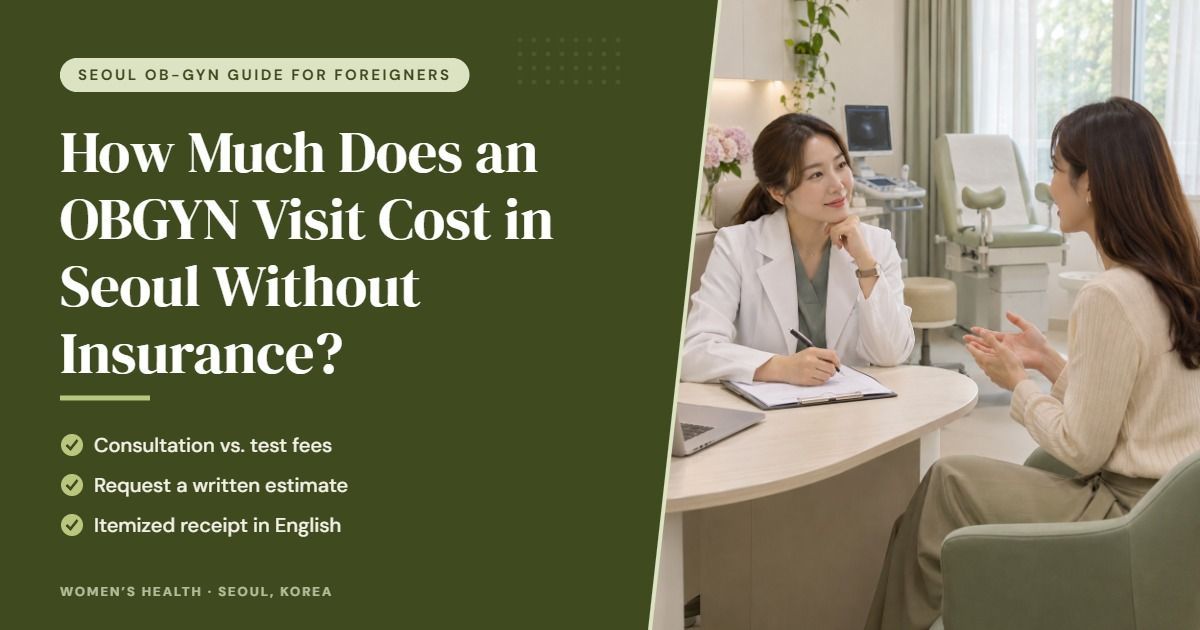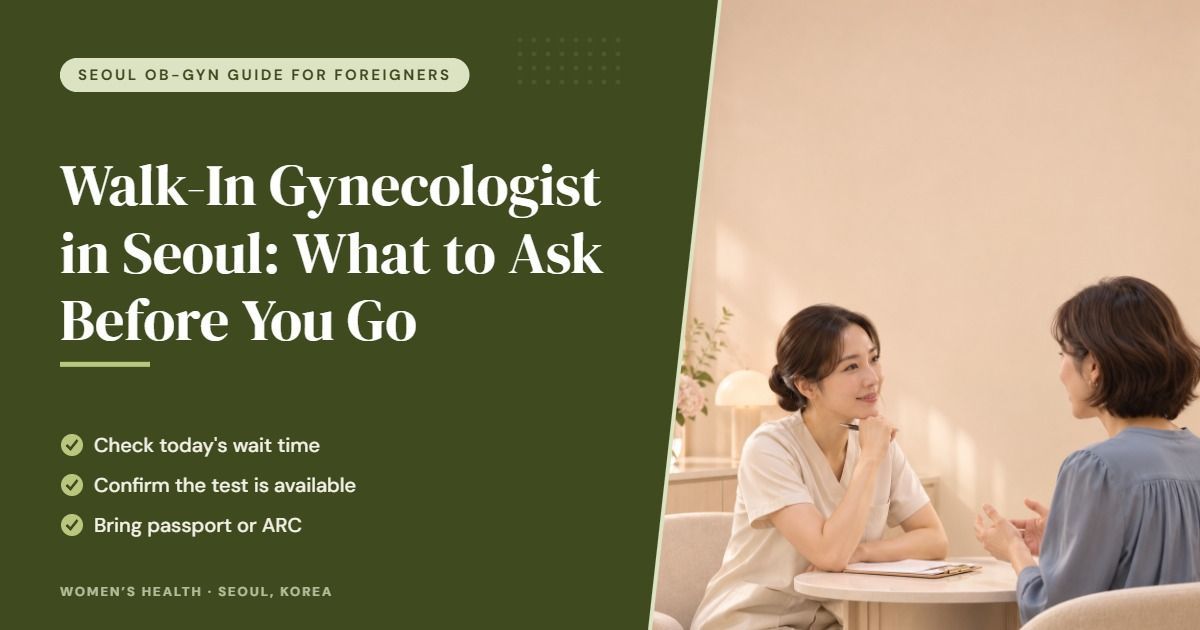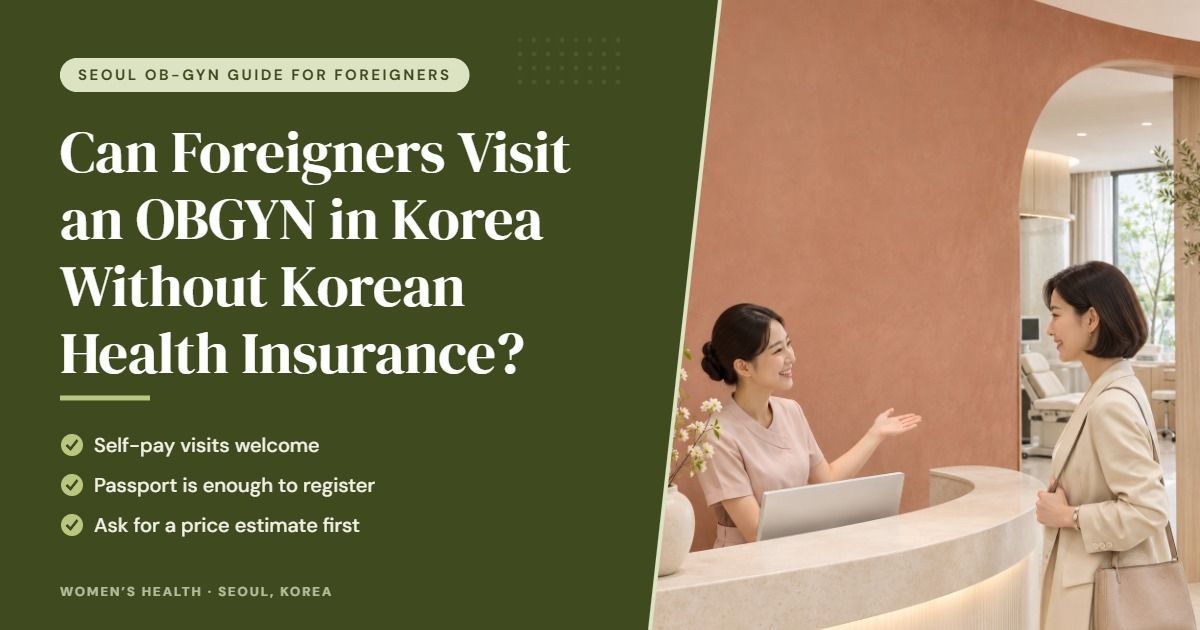
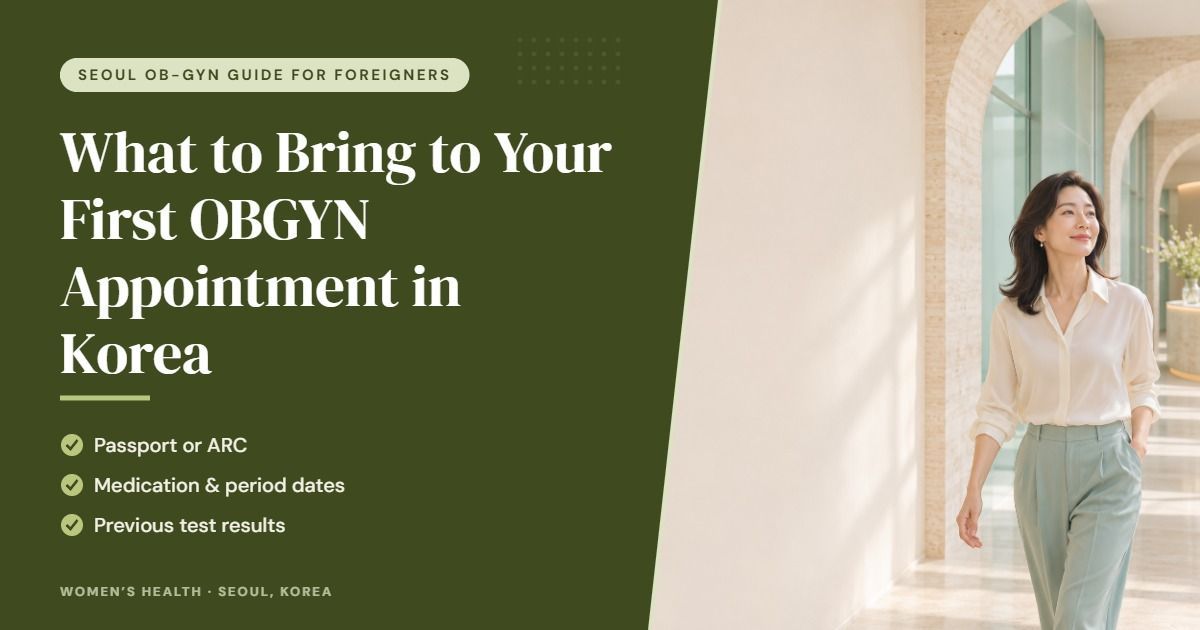
For your first OB-GYN appointment in Korea, bring your passport or residence card (ARC), your insurance details, a list of current medications and allergies, the first day of your last period, and any previous test results or reports. Writing down your symptoms and questions in English helps the doctor understand your history quickly.
Why preparation matters for a first visit
A first OB-GYN visit includes registration, a health history and often an examination. Having your information ready shortens paperwork and helps the doctor focus on your concern.
For foreigners, previous records are especially useful because the clinic cannot access medical history from your home country.
What to prepare before your appointment
- Identification Passport for visitors, or ARC for residents.
- Insurance information NHIS card details or your travel insurance policy.
- Period information The first day of your last period and your usual cycle length.
- Medications and allergies Include birth control, supplements and any drug allergies.
- Previous results Pap smears, ultrasounds, surgeries or vaccination records.
Checklist by visit type
Bring a few extra items depending on why you are visiting.
| Visit type | Extra items to bring | Why |
|---|---|---|
| Routine check-up | Last Pap or HPV result | To plan screening intervals |
| Contraception | Pill name or IUD details | To match or continue your method |
| Pregnancy | Positive test date, prior scans | To estimate dates |
| Symptoms | Symptom notes and timing | To guide tests |
What happens at a first OB-GYN visit
Show ID and complete a short form.
The doctor asks about your cycle, symptoms and medical history.
A pelvic exam or ultrasound may be suggested.
Tests, treatment or follow-up are explained.
Useful things to write down beforehand
- When symptoms started
- Anything that makes them better or worse
- Recent travel or new partners
- Questions about tests or costs
- Your preferred contact method for results
Useful Korean phrases
| English | Korean | Pronunciation |
|---|---|---|
| Is there a doctor who speaks English? | 영어 가능한 선생님 계세요? | Yeong-eo ganeunghan seonsaengnim gyeseyo? |
| Can I get my medical records in English? | 영문 진료기록 받을 수 있나요? | Yeongmun jillyogirok badeul su innayo? |
| My period is late. | 생리가 늦어지고 있어요. | Saengniga neujeojigo isseoyo. |
| Can I get an English receipt? | 영문 영수증 받을 수 있나요? | Yeongmun yeongsujeung badeul su innayo? |
In an emergency in Korea, call 119 . For free interpretation and travel help in English, you can call the Korea Travel Hotline at 1330 .
Frequently asked questions
Do I need my passport for an OB-GYN visit in Korea?
Yes. Visitors usually register with a passport. Residents can use their ARC.
Should I bring previous test results?
Yes. Prior Pap smears, ultrasounds or surgery reports help the doctor give better advice.
Can I visit during my period?
For consultations, yes. For Pap smears it is usually better to book outside heavy bleeding days.
Do I need to fast?
Usually not, unless specific blood tests are planned. Ask the clinic in advance.
What if my records are not in English?
Bring them anyway. Doctors can often review standard reports, and you can ask about translation.
Key takeaways
- Bring your passport or ARC and insurance details.
- Note your last period date and medications.
- Bring previous test results if you have them.
- Write down symptoms and questions in advance.